Table of Contents
|
|
Introduction
Every March, my phone starts blowing up. Friends, colleagues, family members - all asking the same thing: "How do I file my ITR?" Some have been working for five years and still don't know which form to pick. Some run their own business and just hand everything to their CA without understanding a single thing.
This guide is for anyone who has ever filed at the last minute, paid more tax than they needed to, or just stared blankly at their Form 16 wondering what any of it actually means.
You work hard for your money. The least you can do is make sure you are not giving away more of it than you legally have to.
Let us fix that - one step at a time.
What Is ITR Filing and Why It Actually Matters
ITR filing is simply the process of telling the government what you earned, what you spent, and what tax you owe - or what tax refund you're owed back.
Even if your employer already deducted TDS, filing your income tax return is still necessary. It's your official financial record. Banks check it for loans. Visa offices ask for it. And if you overpaid tax, filing is the only way to get that money back.
Skipping it has real consequences - penalties, interest, and a notice you really don't want in your inbox.
Key Dates for AY 2026-27
-
● For most individuals and salaried employees, the due date is 31st July 2026.
-
● For businesses requiring a tax audit, the deadline extends to 31st October 2026.
-
● File early. The portal gets slow, CAs get busy, and last-minute mistakes happen when you're rushing.
Old vs New Tax Regime - Which One Should You Pick?
-
● This is the question almost everyone gets stuck on.
-
● The old vs new tax regime choice comes down to one thing: how many deductions do you have?
-
● The new regime offers lower tax rates but removes most deductions. It works well for people with simple finances - no big investments, no home loan, no HRA.
-
● The old regime keeps all your deductions intact - 80C, HRA, home loan interest, and more. If you're actively investing and claiming deductions, the old regime often saves more income tax in India.
-
● There's no universal right answer. Run the numbers both ways, or ask an online CA India to do it for you. Five minutes of comparison can save you thousands.
For Salaried Employees - What You Need
If you're salaried, your ITR filing process is relatively straightforward.
-
● Start With Form 16
Form 16 is the document your employer gives you after the financial year ends. It shows your total salary, TDS deducted, and any exemptions already applied. This is your starting point - don't file without it.
-
● Check Your AIS and 26AS
Your Annual Information Statement and Form 26AS show every income source and TDS credit linked to your PAN. Cross-check these with your Form 16 before filing. Mismatches are one of the most common reasons for tax notices.
-
● Don't Miss Your Deductions
Tax deductions under 80C, 80D, HRA, and home loan interest can significantly reduce your taxable income - but only if you claim them. Many salaried employees leave money on the table simply by not declaring these properly.
For Business Owners - It Gets a Bit More Involved
If you run a business or are self-employed, your business income tax return involves more moving parts.
-
● Track Your Business Expense Deductions
Business expense deductions are one of the biggest advantages available to business owners. Rent, salaries, software subscriptions, travel, marketing - most legitimate business expenses can be deducted from your taxable income. But only if they're documented properly.
This is where clean bookkeeping during the year pays off directly at tax return filing time.
-
● Capital Gains Tax - Don't Overlook It
If you sold property, mutual funds, or stocks during FY 2025-26, capital gains tax applies. Short-term and long-term gains are taxed differently, and the rules changed again in the last budget. A business tax consultant can help you plan this correctly - especially if the amounts are significant.
-
● When to Bring in a Professional
If your business has multiple income sources, employees, GST filings, or you've had any investments or property transactions - working with a tax consultant nearby or a qualified online CA India is genuinely worth it. The fee they charge is almost always less than the tax you'd overpay or the penalty you'd risk.
How to File ITR Online Step by Step
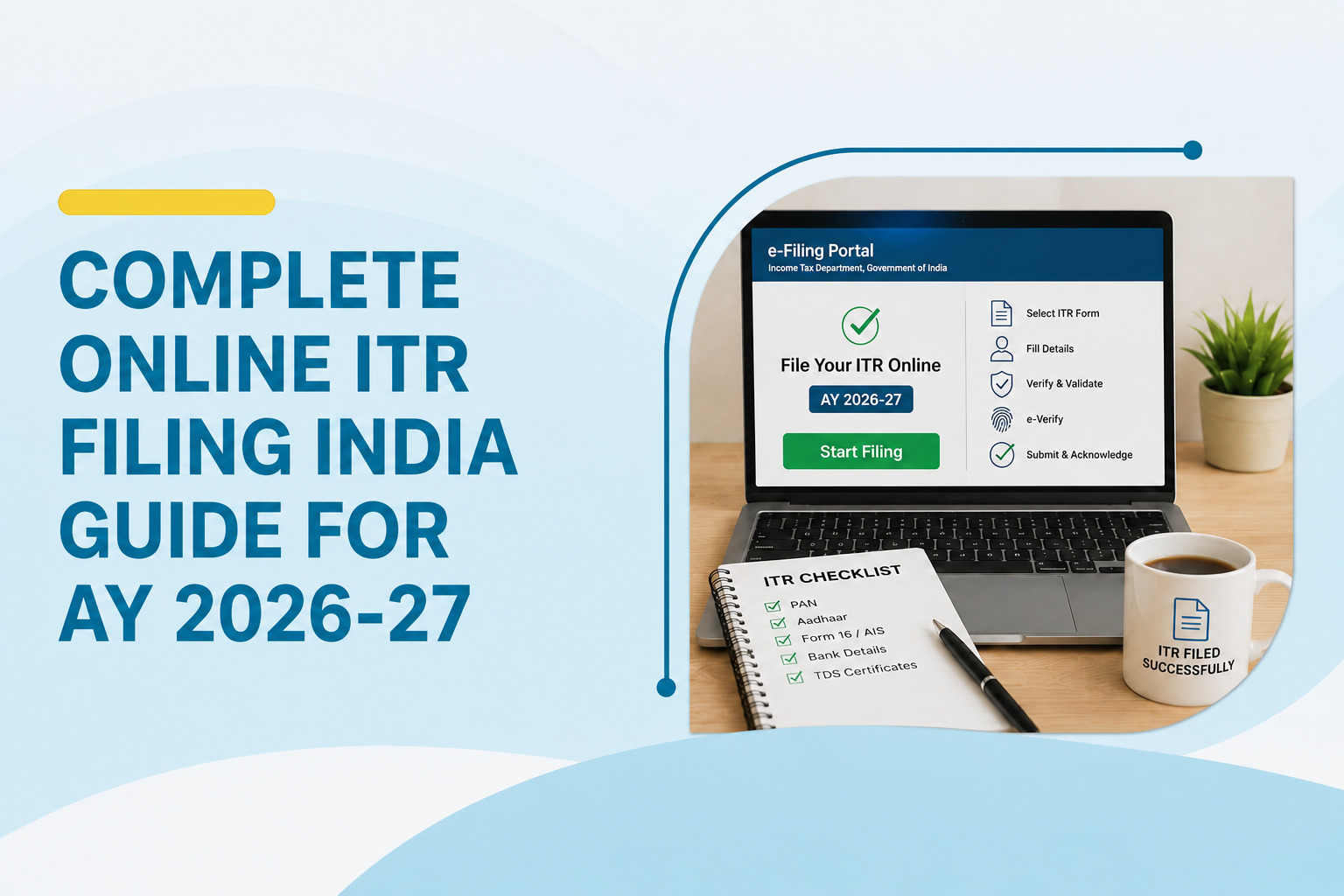
Here's a simple overview of the how to file ITR online step by step process:
-
1. Log in to the Income Tax e-filing portal
-
2. Select the correct ITR form for your income type
-
3. Pre-fill your data using AIS and Form 26AS
-
4. Enter remaining income details and claim your deductions
-
5. Choose your tax regime - old or new
-
6. Verify your tax liability or refund amount
-
7. Submit and e-verify using Aadhaar OTP or net banking
The portal has improved significantly. For straightforward salaried returns, the whole process can take under 30 minutes if your documents are ready.
What Happens If You Miss the Deadline?
-
● Late filing means a penalty of up to ₹5,000 under Section 234F. You also lose the ability to carry forward certain losses - which matters if you're a business owner or investor.
-
● More importantly, a delayed tax refund becomes an even longer wait.
Conclusion
Online ITR filing India in 2026 is more accessible than ever - but accessible doesn't mean automatic. The regime choice, the deductions, the form selection - these decisions still need attention.
Get your documents ready early. Compare both regimes. And if anything feels unclear, a good business tax consultant or online CA India will save you far more than they cost.
File right. File on time. That's really all there is to it.