Table of Contents1. Introduction 2. What Is a GST-Compliant Invoice? 3. Types of GST Invoices 4. Step-by-Step Guide to Creating a GST-Compliant Invoice Template 5. Tools and Software for GST Invoicing 6. Conclusion |
|
Introduction
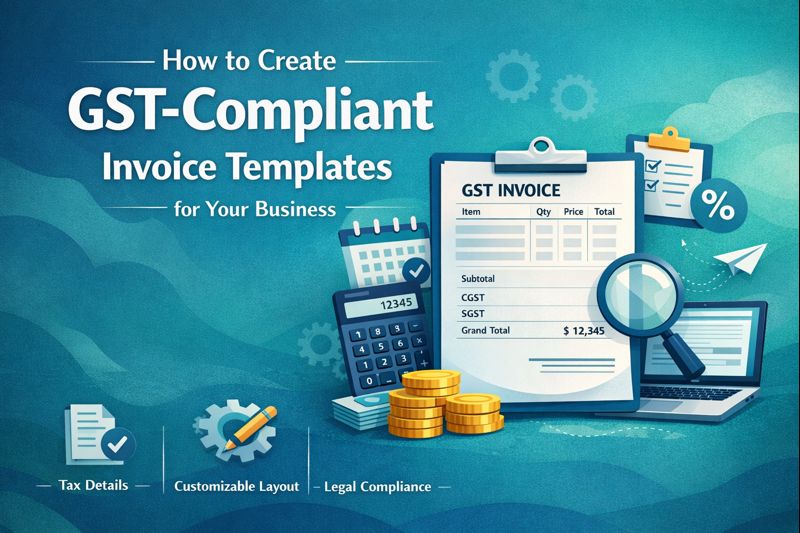
In India, businesses registered under GST must issue invoices in a specific format approved by the tax authorities. An invoice is not just a bill, it is a legal document that proves a sale has taken place and tax has been charged for the same. Using a proper gst invoice template helps your businesses to maintain accuracy, avoid mistakes and stay compliant with GST laws.
Many business owners, especially small traders and service providers find GST invoicing confusing. That’s where a standardized gst invoice template india becomes helpful to take refer. It makes sure that all required details are included which makes tax filing and record-keeping simple. This blog explains GST invoices step by step in plain language so anyone can understand and apply it easily.
What Is a GST-Compliant Invoice?
A GST-compliant invoice is an official document issued by a registered seller to a buyer when goods or services are supplied. It contains specific details required by GST law such as seller and buyer information, description of goods or services and tax amounts.
The purpose of this invoice is to maintain transparency between the seller, buyer and government. When businesses use a correct invoice format, it becomes easier to calculate taxes and claim input tax credit. A properly designed invoice template with gst india makes sure that no mandatory field is missed and reduces the chances of penalties during audits.
Simply put, a GST-compliant invoice protects both the business and the customer by clearly showing how much tax is charged and why.
Types of GST Invoices
Under GST, invoices are issued based on the type of business, nature of supply and registration status. Using the correct invoice type is important if you want to stay compliant and avoid problems during GST return filing.
1. Tax Invoice
A tax invoice is issued when taxable goods or services are sold by a GST-registered seller. This invoice clearly shows the tax charged on the sale. It is mainly used when selling to registered buyers and allows them to claim input tax credit.
2. Bill of Supply
A bill of supply is issued when GST is not charged on the transaction. This usually applies when:
-
➤ Goods or services are exempt from GST
-
➤ The seller is registered under the composition scheme
3. Export Invoice
When goods or services are supplied outside India, an export invoice is issued. These invoices follow special GST rules and are usually treated as zero-rated supplies.
4. Revised Invoice
If a business receives GST registration after issuing normal invoices, revised invoices are issued to replace earlier ones. This helps them to align past transactions with GST requirements.
5. Debit Note
A debit note is issued when the taxable value or tax amount charged earlier was less than required. It is used to correct undercharged invoices.
6. Credit Note
A credit note is issued when the taxable value or tax charged earlier was higher than required. It helps to adjust excess tax paid.
7. Receipt Voucher
Issued when advance payment is received from a customer before supplying goods or services.
8. Refund Voucher
Issued when an advance payment is received but later refunded because the supply did not take place.
Step-by-Step Guide to Creating a GST-Compliant Invoice Template
Creating a GST invoice does not have to be complicated. By following these clear steps, you can make sure that you are compliant every time.
Step 1: Mention Seller Details
Start with your business name, complete address and GST registration number. These details identify who is issuing the invoice.
Step 2: Add a Unique Invoice Number
Each invoice must have a unique serial number. This helps in tracking invoices and maintaining proper records.
Step 3: Include Invoice Date
Mention the date on which the invoice is issued. This is important for tax period calculation.
Step 4: Enter Buyer Information
Add the buyer’s name, address and GST number if they are registered. This ensures proper tax reporting.
Step 5: Specify Place of Supply
Mention the state where goods or services are supplied. This determines whether CGST/SGST or IGST is applicable.
Step 6: Describe Goods or Services Clearly
Include:
-
➤Name of product or service
-
➤Quantity or duration
-
➤Rate per unit
Step 7: Mention HSN or SAC Code
HSN codes are used for goods and SAC codes for services. These codes help to classify supplies under GST.
Step 8: Show Taxable Value
Mention the value on which GST is calculated, it should exclude tax.
Step 9: Provide Tax Breakdown
Clearly show applicable tax rates and amounts so the buyer understands the tax charged.
Step 10: Mention Total Invoice Value
Include the final payable amount after adding taxes.
Step 11: Add Declaration (If Required)
Some businesses include a declaration stating the invoice is correct and compliant.
Step 12: Signature or Authorization
End the invoice with the signature or digital authorization of the seller.
Following these steps helps you to ensure your invoice is legally valid, professional and easy to understand.
Tools and Software for GST Invoicing
Creating invoices manually can be time-consuming and may lead to errors. That’s why many businesses use accounting software and online invoicing tools. These tools come with ready-made formats that automatically calculate tax & prepare a proper format invoice for you.
Most platforms allow customization so you can design an invoice template that matches your business branding while still following GST rules. Using such tools also helps you in storing records safely and generating reports during tax filing.
For businesses that issue invoices regularly, digital invoicing tools save time and improve accuracy.
Conclusion
A GST-compliant invoice is an important part of running a business in India. It ensures transparency, supports tax compliance and builds trust with customers.
By understanding invoice types, required details and correct formatting, you can avoid legal issues and operate smoothly.
Using a standardized gst invoice template makes invoicing simple, professional and error-free. As your business grows, adopting proper invoicing practices and tools will help you stay compliant while focusing on growth and customer satisfaction.