Table of Contents1. Introduction |
|
Introduction
When it comes to Old vs New Tax Regime, most business owners in India find themselves stuck between two options that seem simple on paper but get confusing once you start doing the actual math.
Every year during tax planning season, the same question comes up in every accountant's office and every small business WhatsApp group: should we stick with the old system full of deductions, or switch to the new one with lower rates but almost no exemptions? There's no one-size-fits-all answer here, and that's exactly why understanding both regimes properly matters before you file your returns.
What Is the Old Tax Regime?
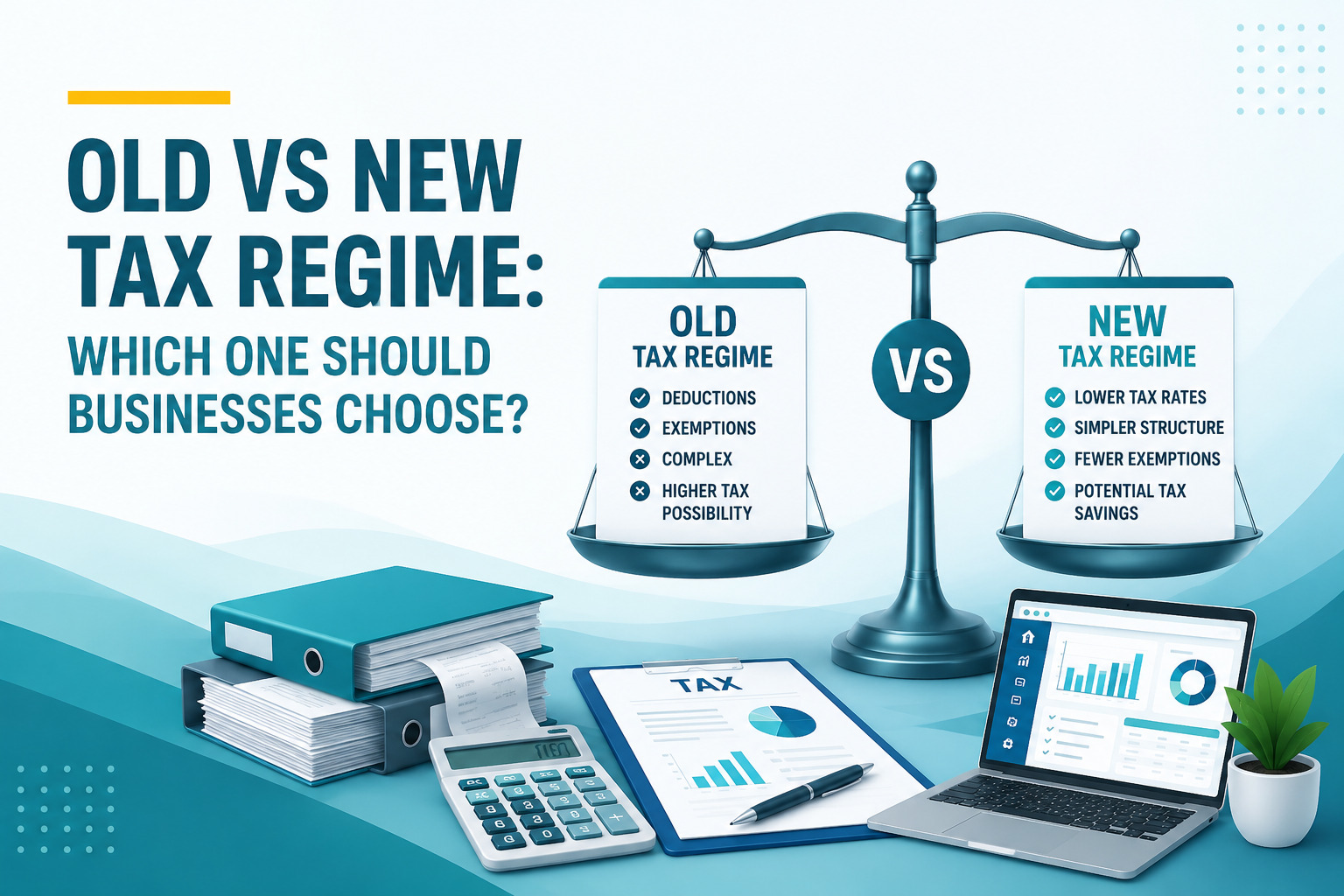
The old tax regime is the system most businesses have used for years. It comes with higher tax slab rates, but it allows a long list of old tax regime deductions - things like Section 80C investments, HRA, home loan interest, business expenses, depreciation claims, and various other exemptions. If your business has genuine expenses, loans, or investments that qualify, this regime can actually work out cheaper in the long run, even though the tax rates look higher at first glance.
For proprietorships and small firms that already have structured investments or loans running, the old regime often makes more financial sense simply because there's more room to reduce taxable income legally.
What Is the New Tax Regime?
The new tax regime was introduced to simplify things. It offers lower slab rates but removes most deductions and exemptions.
-
● The idea behind the new tax regime benefits is straightforward - less paperwork, simpler filing, and a cleaner calculation process.
-
● For businesses that don't have many investments to claim or don't want to deal with maintaining proof of every deduction, this option feels a lot less stressful.
-
● However, if your business relies heavily on deductions to lower its tax bill, switching to the new regime without checking the numbers first could actually increase your tax outgo.
Tax Calculation India: Why the Numbers Matter More Than the Rates
This is where most people go wrong. They look at the tax slabs and assume lower rate automatically means lower tax. But tax calculation India isn't that simple. You need to sit down (or have your CA sit down) and calculate your actual tax liability under both regimes using your real income, expenses, and eligible deductions. Only then can you honestly answer which tax regime is better for your specific business.
A textile shop owner claiming heavy business expenses might save more under the old regime. A freelancer or consultant with minimal deductions might find the new regime lighter on the pocket. It genuinely depends on your numbers, not general opinions.
Business Accounting and Taxation: The Bigger Picture
Choosing a tax regime isn't a standalone decision - it's part of your overall business accounting and taxation strategy. It affects how you plan investments, how you structure loans, and even how you manage cash flow through the year. Good financial planning for businesses means looking beyond just this year's tax bill and thinking about how consistent regime choice affects long-term savings and compliance.
This also ties directly into income tax filing for business, since the regime you pick determines which forms, exemptions, and documentation you'll need to keep ready. If you're doing income tax for proprietorship, the choice becomes even more personal since proprietorship income is taxed as individual income, making the old vs new comparison directly impactful on your take-home profit.
New Tax Rules India: What's Changed Recently
With the new tax rules India has introduced over recent years, the new regime has become the default option unless a business specifically opts for the old one. This shift has pushed many small business owners to rethink their approach to small business tax planning, since staying on autopilot with the default regime might not always be the financially smart move.
Old Tax Regime vs New Tax Regime India: Making the Right Call
So how do you actually decide? Here's a simple approach for how to choose between old and new tax regime:
-
● List all your current deductions and exemptions you actually use (not the ones you could theoretically claim)
-
● Calculate your tax liability under both regimes using real figures
-
● Consider future investments - are you planning to take a home loan or increase insurance coverage?
-
● Factor in the compliance effort you're willing to put in
-
● Compare the final tax outgo, not just the slab rates
If your deductions add up to a significant amount, the old regime likely still wins. If you have minimal exemptions and prefer simplicity, the new regime probably suits you better.
Conclusion
At the end of the day, the debate around old tax regime vs new tax regime India doesn't have a universal winner - it depends entirely on your business's income structure, expenses, and future financial goals. Rather than following what others are choosing, take time to actually calculate both scenarios with real numbers. A little effort in comparing both regimes today can save meaningful money over the financial year, and that's what smart small business tax planning is really about.