Table of Contents1. Introduction |
|
Introduction
A few years ago, if you walked into almost any small business, you'd find the same scene - a tired owner squinting at an Excel sheet late at night, trying to figure out where all the money actually went.
Bookkeeping felt like a chore nobody wanted, and by the time an accountant explained the number, the month was already over and the moment to act had passed. That's changing now, and it's changing fast. More small business owners are turning to AI accounting software simply because it saves them from this exact headache - showing what's happening with their money as it happens, not weeks later.
This isn't some fancy tool reserved for large corporations anymore. Small shop owners, freelancers, local service providers, and growing startups are all jumping on board because, honestly, they don't have the luxury of hiring a full finance team. They need something simple that just works.
Why Small Businesses Are Warming Up to Smart Financial Tool
Here's the thing - small businesses were never short on data. What they lacked was a way to actually understand it.
-
● Sales numbers, expenses, supplier payments, taxes - it all piles up, and most owners simply don't have time to sit and analyze it.
-
● This is where a business intelligence dashboard becomes genuinely helpful.
-
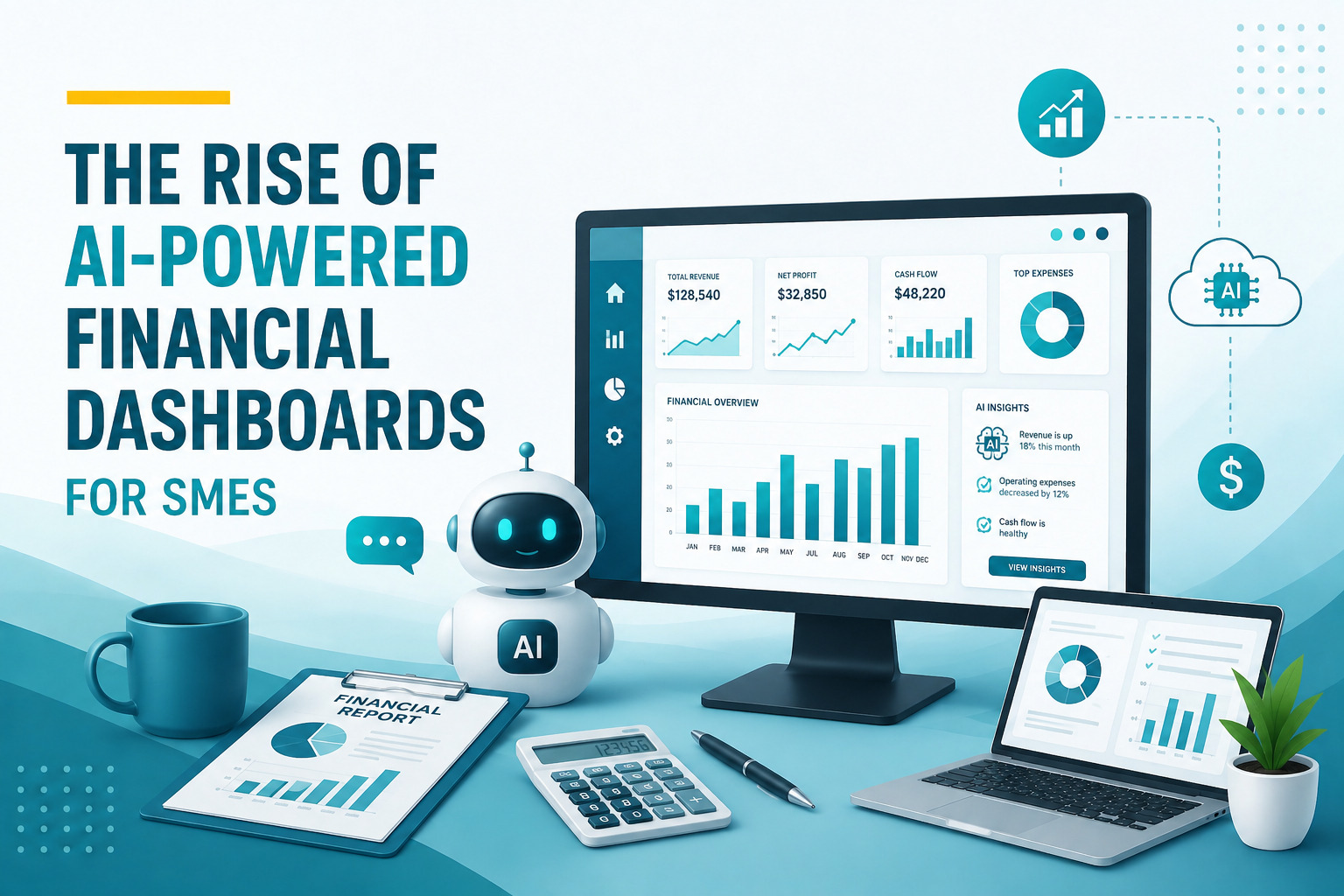
● Instead of digging through rows and columns, an owner can glance at one screen and immediately know if things are going well or if something needs attention.
-
● Think about a small café owner who used to spend Sunday night manually adding up the week's sales and expenses.
Now, a good financial management software setup does that automatically - pulling numbers from the bank, categorizing expenses, and even flagging anything that looks off, like a supplier bill that suddenly went up.
What Actually Makes These Dashboards Useful
Old-school accounting tools were basically digital filing cabinets. You put numbers in, and that's it - they just sat there. Nothing dynamic about them. Today's financial reporting software works differently. It connects directly to bank accounts, updates on its own, and in many cases, tries to predict what's coming next based on past patterns. This is exactly why financial planning software has become so valuable - owners can see a slow season coming, or prepare for a tax deadline, instead of getting blindsided by it.
-
● Seeing the Numbers, Not Just Reading Them
-
● One thing that's made a real difference is financial data visualization. Let's be honest, most people glaze over when they see a table full of numbers. But show them a simple line graph with revenue dipping in March, and suddenly it clicks. You don't need an accounting background to understand a chart that's color-coded and easy to read. That's the whole point - making finance less intimidating.
-
● AI That Explains the "Why," Not Just the "What"
-
● This is where AI business analytics really shines. It's not just showing that profits dropped - it's pointing out that a specific product cost more to produce this month, or that a client's payment came in late. Previously, figuring this out meant hours of manual cross-checking. Now, it's almost instant, and owners get answers instead of just numbers.
Cash Flow - The Part That Keeps Owners Up at Night
Ask any small business owner what worries them the most, and cash flow usually comes up first. A business can look profitable on paper and still run into trouble if money isn't coming in fast enough. That's why a cash flow dashboard has become such a lifesaver. It lays out incoming and outgoing money on a timeline, so owners can spot a potential shortfall weeks in advance - giving them time to chase overdue invoices or cut back on spending before it becomes a real problem.
Looking at the Bigger Picture
Money isn't the only thing that matters, though. A solid business performance dashboard also tracks things like sales patterns, customer growth, and even how inventory is moving. It paints a fuller picture of how the business is actually doing, not just how much cash is in the account. And thankfully, most modern business dashboard software is built with everyday business owners in mind - no coding skills or IT support required.
Accounting Software That Doesn't Feel Overwhelming
What's really changed the game is affordability. SME accounting software used to be either too basic to be useful or too expensive for a small setup. Now, cloud-based tool offer solid, professional-grade features without the enterprise price tag. Pair that with financial analytics software, and business owners can finally compare their own performance month over month, instead of guessing which product or service is actually making them money.
It's Still About People, Not Just Machines
None of this means accountants or human judgment are going away. AI simply takes over the repetitive, time-consuming parts - the manual entry, the number-crunching - so owners can spend more time thinking about strategy and their customers instead of spreadsheets.
Conclusion
The rise of AI-powered financial dashboards isn't just a passing trend - it's genuinely reshaping how small businesses handle money. From AI accounting software to cash flow dashboards, these tools are giving owners something they rarely had before: clarity, and enough time to actually act on it.
Businesses that start using these tools now are likely to feel more in control, make quicker decisions, and stay a step ahead in a market that's only getting more competitive.