Table of Contents
|
|
Introduction
Most owners don't notice the problem until something breaks - a missed payroll, a surprise tax bill, or a cash shortage that snuck up quietly. By then, the damage is already done.
The warning signs are always there. You just need the right tools to catch them early. If financial surprises have become normal in your business, it's time to look at your financial analytics and figure out where the gaps are.
Better decisions start with better visibility. Nothing more, nothing less.
1. You Don't Know Your Cash Position Until It's Too Late
This is the most common problem - and the most dangerous. If you're finding out about a cash shortage only when a payment bounces or a vendor calls, your cash flow visibility is broken.
Good business cash flow management means you should know, at any given moment, how much money is coming in, going out, and sitting idle. Without that, every week becomes a guessing game.
What to look for:
-
● You regularly "check the balance" before approving expenses
-
● Payroll feels stressful every cycle
-
● You've had surprise overdrafts or tight windows before client payments land
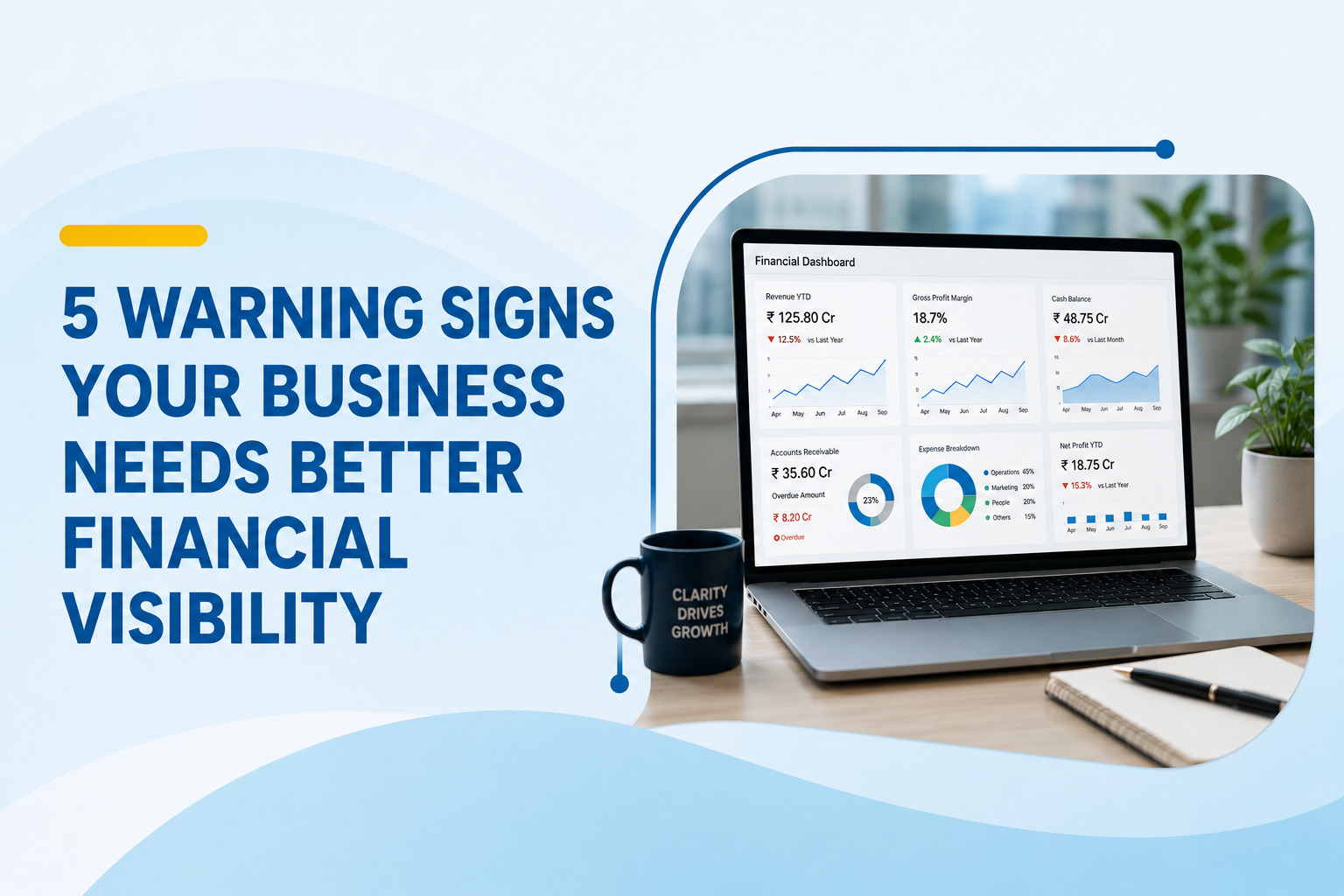
A proper financial dashboard gives you a live view of your inflows and outflows - no surprises, no panic.
2. Your Reports Come Too Late to Be Useful
If your monthly profit and loss reporting lands two or three weeks after the month ends, the data is already old. Decisions made on stale numbers are rarely good ones.
Real-time financial reporting isn't a luxury anymore - it's a basic need for any business that wants to stay competitive. When your team is still manually pulling numbers from spreadsheets, you're always behind.
Financial reporting software and modern business intelligence dashboards can cut reporting time from weeks to hours. The faster you see the picture, the faster you can act on it.
3. Budgets Are Set But Never Monitored
Many businesses spend time building a solid budget at the start of the year - and then never look at it again until December. That's not budget monitoring, that's just wishful thinking.
Business performance monitoring means checking actual vs. planned numbers on a regular basis - weekly or at least monthly. If your sales team overspent on travel in Q1, you want to catch that in February, not find out in Q4 when it's already damaged your margins.
Signs this is happening in your business:
-
● Department heads don't know their budget limits
-
● Variance reports don't exist or aren't reviewed
-
● You've gone over budget on multiple line items without early warning
A solid financial KPI dashboard keeps every department accountable without needing a finance person to chase people down manually.
4. Finance and Operations Are Working in Silos
When your sales team doesn't know the cost implications of a discount they are offering, or your operations team doesn't understand how inventory delays affect working capital management - that's a visibility problem, not just a communication problem.
Business financial management works best when information flows across the whole business, not just sits inside one team's inbox.
Management reporting software bridges this gap. It pulls data from multiple sources - sales, HR, inventory, accounts - and presents it in one place so everyone is working from the same truth.
When finance and operations are disconnected:
-
● Pricing decisions get made without margin data
-
● Procurement happens without cash flow context
-
● Revenue grows but profits don't follow
Financial transparency across departments is what turns a busy business into a profitable one.
5. You are Reacting to Problems Instead of Preventing Them
If your financial conversations mostly happen after something goes wrong, that's a red flag. Strong financial planning and analysis should help you spot problems weeks or months before they become real issues.
This is where financial decision-making tools and accounting automation start paying off. Instead of spending hours reconciling last month's numbers, your team focuses on what the next 90 days look like - and where the risks are hiding.
Revenue tracking trends, margin shifts, and expense patterns can all signal trouble early. But only if someone is watching them consistently.
Conclusion
Financial visibility isn't about having more data - it's about having the right data at the right time. If your business struggles with late reports, surprise cash shortages, unmonitored budgets, or departmental disconnects, these aren't small problems. They compound quietly and show up as lost growth, poor decisions, and avoidable stress.
Investing in the right financial analytics, a reliable financial dashboard, and proper business intelligence tools is one of the highest-return decisions a business owner can make. Start with the area that hurts most - and build from there.