Table of Contents1. Introduction |
|
Introduction
If you run a business in India, GST is one of those things you cannot afford to get wrong month after month. Missing a filing date, skipping a reconciliation, or sending out invoices with the wrong format - these small slip-ups add up fast into late fees, blocked input tax credit, and sometimes a notice from the department. The good news is none of this is complicated once you have a proper GST monthly compliance checklist to follow.
This guide breaks it down in a simple, practical way - whether you are a small business owner, a startup founder, or a freelancer filing on your own.
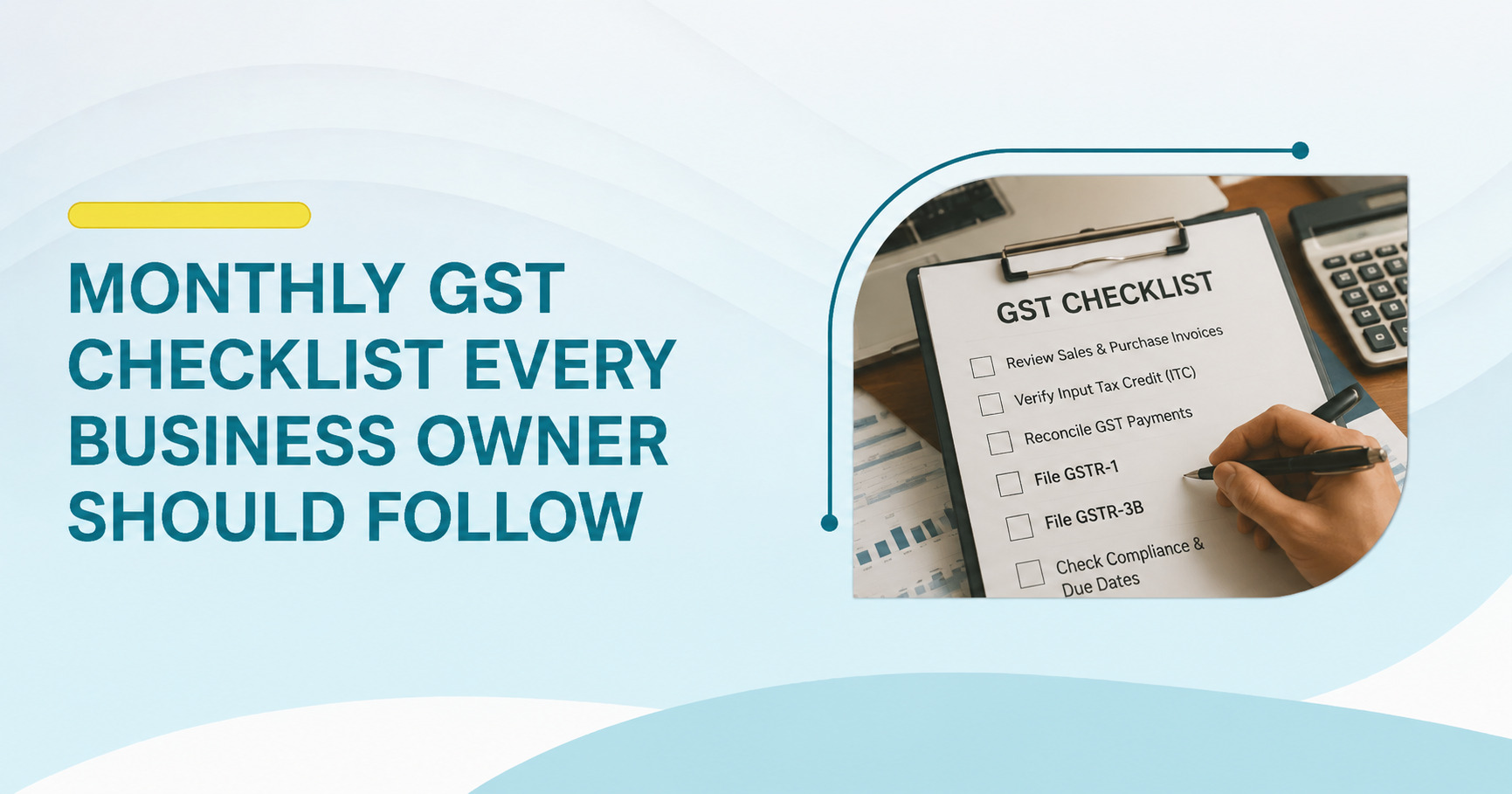
Monthly GST Checklist
-
● Start with Your GST Invoice Requirements
-
● Key GST Due Dates to Mark Every Month
-
● GSTR-1 Filing - Your Outward Sales Report
-
● GSTR-3B Filing - Where Tax Actually Gets Paid
-
● GST ITC Reconciliation - Do Not Skip This
-
● GST Documents Required - Keep These Ready Always
-
● End-of-Month GST Health Check
Start with Your GST Invoice Requirements
Before you even think about filing, make sure every invoice you raised that month is correct. This is where most businesses create problems for themselves without realising it. A GST-compliant invoice needs your GSTIN, the buyer's GSTIN if they are registered, HSN or SAC code, tax rate, and invoice number in a proper sequence. Missing any of these can cause issues during reconciliation or assessment later.
Keep a habit of reviewing your sales invoices in the first week of every month for the previous month. Catch errors early - correcting them later through amendments is doable but adds unnecessary work.
Key GST Due Dates to Mark Every Month
One of the most important parts of any GST filing checklist is knowing your deadlines. Missing them means late fees and interest, no exceptions.
|
Due Date |
Compliance Task |
Description |
|
11th of month |
GSTR-1 Filing |
Monthly outward supply return for turnover above ₹5 crore |
|
13th of month |
GSTR-1 (IFF) |
Invoice furnishing for QRMP scheme taxpayers |
|
20th of month |
GSTR-3B Filing |
Monthly summary return with tax payment – non-negotiable deadline |
|
Quarterly |
GSTR-2B Check |
Auto-drafted ITC statement – cross-check before filing 3B |
GSTR-1 Filing - Your Outward Sales Report
GSTR-1 is your monthly report of all sales made. Every B2B invoice, B2C summary, credit note, and debit note needs to go in here accurately. Your buyer's ITC depends on what you report, so errors hurt both sides. Before filing, cross-check your sales register against the invoices raised and make sure the figures match exactly.
GSTR-1 quick checklist :-
-
● All B2B invoices entered with correct GSTIN of buyer
-
● B2C invoices summarised correctly by state and rate
-
● Credit notes and debit notes reported against original invoices
-
● HSN summary filled if turnover exceeds threshold
-
● No duplicate invoice numbers
GSTR-3B Filing - Where Tax Actually Gets Paid
GSTR-3B is your summary return and the one where you actually pay your GST liability. Get this wrong and the consequences are immediate - interest on unpaid tax at 18% per annum kicks in from the due date itself. Before filing GSTR-3B, always check your GSTR-2B to confirm how much ITC you can actually claim that month. Do not just go by your purchase register - the portal figures are what count.
GST ITC Reconciliation - Do Not Skip This
This is probably the step most small businesses ignore and regret later. Input tax credit reconciliation means matching what your suppliers have uploaded in their GSTR-1 with what is appearing in your GSTR-2B. If a supplier has not filed or filed with wrong details, your ITC gets blocked.
Make it a habit to do your GST ITC reconciliation every month before the 20th. Follow up with suppliers whose invoices are missing. The department has been strict about ITC claims that do not match 2B, and you do not want a notice over your vendor's filing mistake.
Monthly ITC reconciliation steps :-
-
● Download GSTR-2B from GST portal after 14th of the month
-
● Match with your purchase register line by line
-
● Flag invoices missing from 2B and follow up with vendors
-
● Claim only ITC that appears in 2B while filing 3B
-
● Keep a monthly mismatch log for records
GST Documents Required - Keep These Ready Always
For smooth monthly filing and any future GST audit checklist review, maintain a clean folder every month with your sales invoices, purchase invoices, e-way bills if applicable, bank statements, and payment challans. Digital copies work fine - just keep them organised month-wise. If you ever get a scrutiny notice, having everything in order saves a lot of stress.
End-of-Month GST Health Check
Before you close the books each month, run a quick GST health check on these points - it takes 15 minutes and can save you from expensive corrections later.
-
● All invoices raised and received are recorded correctly
-
● GSTR-1 filed and acknowledgement saved
-
● GSTR-2B downloaded and reconciled with purchases
-
● GSTR-3B filed and tax paid with challan saved
-
● No mismatches pending with key suppliers
-
● All documents archived month-wise for records
Conclusion
GST compliance does not have to feel like a monthly headache. Once you build a simple routine around your GST monthly compliance checklist - invoices in order, GSTR-1 filed on time, ITC reconciled before 3B, documents stored properly - it becomes just another part of running your business. The businesses that get into trouble are usually not the ones doing anything complicated wrong. They are just the ones skipping steps. Follow the checklist, hit the due dates, and you stay clean.