Table of Contents
|
|
Introduction
-
● Running a small business is exhausting.
-
● Customers, suppliers, team, deliveries - and somehow at the end of it all, you're still buried in invoices and mismatched numbers.
-
● Nobody started a business to do bookkeeping. But for most small business owners, it quietly became a second job.
-
● The real problem isn't effort. It's that too much of your effort is going toward tasks that accounting software for small business could simply handle on its own.
-
● Worth asking yourself - are you managing your finances, or just surviving them?
-
● Yet that's exactly what millions of MSME owners still do every single day.
-
● In 2026, that needs to change and honestly, it already is changing - just not fast enough.
The Real Problem With Manual Finance Work
Let's be honest. Most small business owners didn't start their company because they love bookkeeping. But somewhere along the way, small business accounting became one of the biggest time-sinks in the entire operation.
Manual data entry leads to errors. Errors lead to wrong tax filings. Wrong filings lead to penalties. And somewhere in all that chaos, your actual cash flow management suffers because nobody had time to look at the numbers properly.
This isn't a skill problem. It's a systems problem.
What Accounting Automation Actually Means
-
● Most people hear the word "automation" and immediately think about robots taking over jobs. That fear is understandable - but it's not what's actually happening here.
-
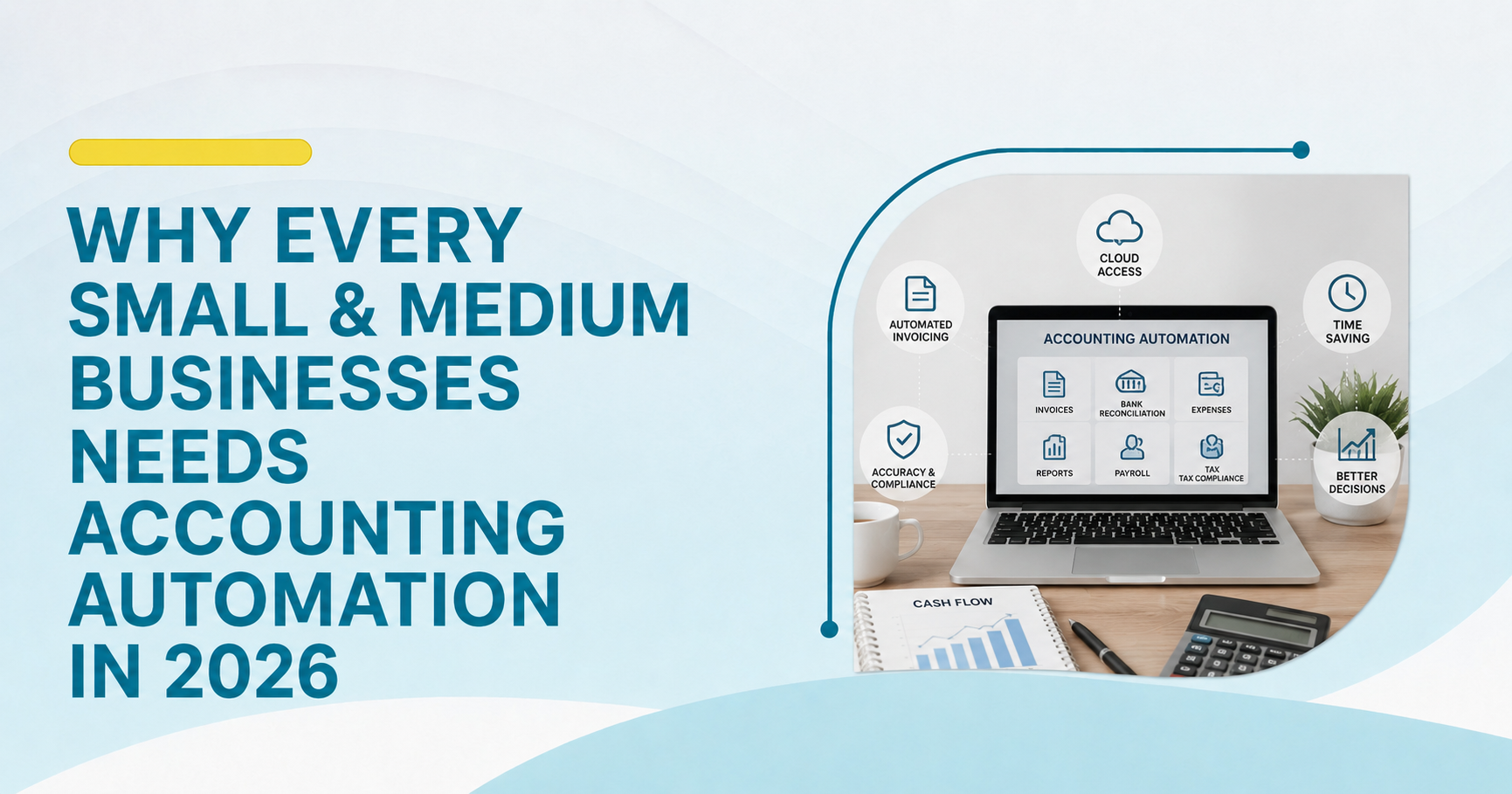
● Accounting workflow automation is really just this: let the software handle the boring, repetitive stuff so your people can focus on work that actually needs a human brain.
-
● Take invoice automation as a simple example. Right now, someone on your team is manually creating invoices, emailing them out, remembering to follow up, and then updating the books when payment comes in. Every single time. For every single client.
-
● With automation, that entire chain happens on its own. Order completed? Invoice goes out. Payment overdue? Reminder sends automatically. Money received? Books update instantly. Nobody had to touch anything.
-
● That's not some complicated technology. That's just a smarter way to run the same process you're already running.
-
● Business finance software today is built around this idea: remove the friction from routine tasks, and give your team the space to actually think about the business.
Why 2026 Is the Tipping Point for MSMEs
-
● A few years ago, cloud accounting software was mostly for big companies with IT teams and large budgets. That's no longer true.
-
● Today, accounting software for small business has become genuinely affordable, genuinely simple, and genuinely powerful - even for a 5-person team running out of a single office.
Here's what's shifted:
-
● AI is now built into the tools. Modern AI accounting software can read a receipt, categorize an expense, match it to the right project, and flag anything unusual - all without manual input. AI invoice processing alone can save a business 6-10 hours every week.
-
● GST and compliance pressure is real. For businesses in India especially, accounting software India options have matured significantly. Staying GST-compliant manually is genuinely risky. Automation reduces that risk without adding headcount.
-
● Banks and investors expect clean books. Whether you're applying for a working capital loan or onboarding a new enterprise client, clean financial records matter. Financial reporting automation means your reports are always ready - not something you scramble to prepare at the last minute.
The Core Areas Where Automation Changes Everything
-
● Invoice and Expense Management
Invoice management software keeps your receivables moving. No more forgotten follow-ups, no more wondering if a client received the invoice. Paired with expense management tools, you get a real-time view of what's coming in and going out - which is the foundation of healthy business finance software decisions.
-
● Payroll Without the Headache
Payroll automation software handles salary calculations, deductions, compliance, and payslip generation automatically every cycle. For growing MSMEs, this is often the first place automation pays for itself - both in time saved and errors avoided.
-
● Cash Flow You Can Actually See
Most small businesses don't fail because they're unprofitable. They fail because of poor cash flow management. Automated tools give you a live dashboard so you always know where you stand - not where you stood three weeks ago when someone last updated the spreadsheet.
What to Look For in Accounting Software for Startups
If you're just getting started or switching from a manual system, keep it simple. Good accounting software for startups should:
-
● Be cloud-based so your data is accessible anywhere
-
● Offer finance automation for invoices, expenses, and reports
-
● Scale with you - meaning it handles 10 clients or 500 without changing platforms
-
● Integrate with your bank, your GST portal, and ideally your CRM
-
● Have local support if you're operating in India
Business process automation doesn't require the most expensive tool. It requires the right tool for your size and workflow.
The Human Side of All This
-
● Here's something the software companies won't always say: automation isn't about removing people from finance management software decisions. It's about giving your people better information, faster.
-
● Your accountant becomes more valuable when they're analyzing trends instead of entering data. Your founder makes better decisions when they can see real numbers in real time. Your team trusts the process more when payroll always runs on time and invoices never fall through the cracks.
-
● Small business accounting done right isn't cold or mechanical. It actually creates more space for the human conversations that matter - pricing strategy, growth planning, hiring decisions - because the routine work is handled.
Conclusion
2026 is not the year to keep doing things the hard way. The tools exist. The pricing is reasonable. The risk of not automating - missed invoices, compliance errors, cash flow surprises - is higher than the cost of getting started.
If you run an MSME and you're still doing your books manually, this is the year to change that. Not because it's trendy. Because it simply works better.